Phenotyping and Experimental Pathology for Pre Clinical Translational Research
Translational animal research expertise, support and collaborations.
Dr. Brayton serves as Core director.
Please contact phenocore@jh.edu to discuss your project and needs.
Advance planning during grant and or ACUC protocol preparation is recommended.
- Expertise in anatomic and clinical pathology, diverse species, research areas, mouse etc preclinical models.
- Please contact relevant faculty BEFORE beginning a project or submitting specimens.
- NO hazardous specimens, and NO human specimens are tested.
Contact
Phone: 410-502-3050
Email: phenocore@jhmi.edu
Address:
Johns Hopkins University School of Medicine
733 N Broadway, MRB 851
Baltimore, MD 21205
(see map)
Key Personnel
Cory Brayton, DVM, Dip. ACLAM, Dip. ACVP
- Role: Core Director
- Expertise: Experimental pathology, genetically engineered mice, phenotyping, histopathology, clinical pathology, experimental design
- Phone: 410-502-3050
- Email: cbrayton@jhmi.edu
The phenotyping core interacts with Johns Hopkins faculty and cores with phenotyping and research expertise ranging from live animal imaging to metabolomics.
Contact us for more information, also search iLAB for other JH core resources.
Resources
- JHU Mousers [JH Only] to join the listserve, email jhu-mousers-request@lists.johnshopkins.edu
- Research-Relevant Conditions and Pathology of Laboratory Mice, Rats, Gerbils, Guinea Pigs, Hamsters, Naked Mole Rats, and Rabbits. Cooper TK, Meyerholz DK, Beck A, Delaney MA, Piersigilli A, Southard TL, Brayton CF. ILAR J. 2022. https://pmc.ncbi.nlm.nih.gov/articles/PMC9291387/
- Research-Relevant Clinical Pathology Resources: Emphasis on Mice, Rats, Rabbits, Dogs, Minipigs, and Non-Human Primates. Bau-Gaudreault L, Arndt T, Provencher A, Brayton C. ILAR J. 2021. https://pubmed.ncbi.nlm.nih.gov/33712827/
- Research Relevant Background Lesions and Conditions: Ferrets, Dogs, Swine, Sheep, and Goats. Helke KL, Meyerholz DK, Beck AP, Burrough ER, Derscheid RJ, L EF, Scudamore CL, Brayton CF. ILAR J. 2021. https://pubmed.ncbi.nlm.nih.gov/33712827/
- Research-Relevant Background Lesions and Conditions in Common Avian and Aquatic Species. Mangus LM, França MS, Shivaprasad HL, Wolf JC. ILAR J. 2021. https://pubmed.ncbi.nlm.nih.gov/33782706/
- Research Relevant Conditions and Pathology in Nonhuman Primates. Saravanan C, Flandre T, Hodo CL, Lewis AD, Mecklenburg L, Romeike A, Turner OC, Yen H. ILAR J. 2021. https://pmc.ncbi.nlm.nih.gov/articles/PMC8918156/
- Immune Relevant and Immune Deficient Mice: Options and Opportunities in Translational Research. Radaelli E, Santagostino SF, Sellers RS, Brayton CF. ILAR J. 2019. https://pmc.ncbi.nlm.nih.gov/articles/PMC7114723/
- Alliance for Genome Resources https://community.alliancegenome.org/
- MGI Mouse Genome Informatics: Nomenclature, Phenome Database, Find Mice, ES cells etc
- IMPC International Mouse Phenotyping Consortium, Mice, Phenotyping Pipelines and data (IMPRESS) https://www.mousephenotype.org/
- NIH Principles and Guidelines for Reporting Preclinical Research. https://grants.nih.gov/policy-and-compliance/policy-topics/reproducibility
- NIH RRID site https://orip.nih.gov/division-comparative-medicine/research-resources-directory/research-resource-identifiers-rrids
- ILAR Guidance for the Description of Animal Research in Scientific Publications. NRC 2011. https://nap.nationalacademies.org/catalog/13241/guidance-for-the-description-of-animal-research-in-scientific-publications
- ARRIVE 2.0 Animal Research: Reporting In Vivo Experiments guidelines. https://arriveguidelines.org/arrive-guidelines
FIGURE LEGENDS:
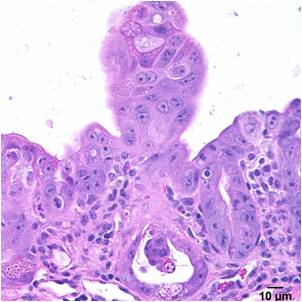
[Segmented filamentous bacteria (intestine) affect immune development and responses in mice and other species]
High resolution radiography. [mouse foot]
Board certified pathologists can analyze and score neoplastic, toxic, and inflammatory changes.
![Necropsy and histopathology to characterize and confirm important research findings, and diagnose unexpected findings or problems in a colony or research project. [Segmented filamentous bacteria (intestine) affect immune development and responses in mice and other species]](https://mcp.bs.jhmi.edu/wp-content/uploads/2020/12/NSGileumSFB.jpg "NSGileumSFB")
![High resolution radiography for small animals and specimens. [mouse foot]](https://mcp.bs.jhmi.edu/wp-content/uploads/2020/12/Mouse-Paw-Faxitron-302x302-1.jpg "Mouse-Paw-Faxitron-302x302")